Live Betting Goldmines: Tennis Break Points and Basketball Free Throws Odds Breakdown
Live Betting Goldmines: Tennis Break Points and Basketball Free Throws Odds Breakdown
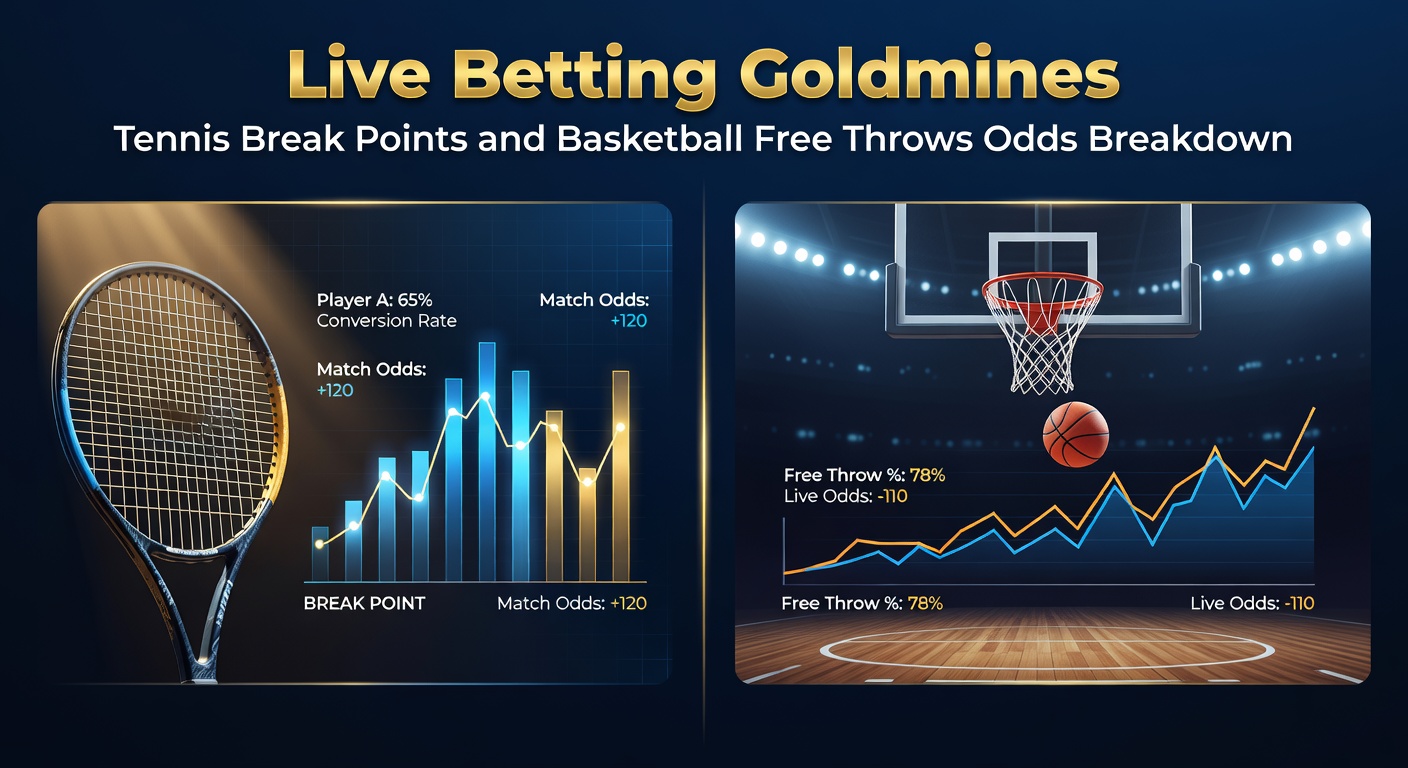
Unpacking the Appeal of Live Betting in Tennis and Basketball
Live betting thrives on momentum shifts, those split-second moments where odds swing wildly based on real-time action; in tennis, break points stand out as prime examples, while basketball's free throws offer similar high-stakes drama, and bettors who track these closely often spot value before bookmakers adjust. Data from major tours reveals patterns—ATP matches see break points converted at around 42% on average, according to ITF analytics, yet live odds frequently lag behind player form, fatigue, or surface conditions, creating edges for sharp observers. Turns out, the same holds for NBA free throws, where shooters hit 77.4% league-wide in the 2025-26 season per official stats, but in-play lines on makes or misses fluctuate with foul trouble and game pressure, drawing in punters who crunch historical conversions.
What's interesting about these markets lies in their frequency and predictability; tennis serves up multiple break opportunities per set, especially on clay where baselines grind out longer rallies, and basketball teams attempt free throws in clusters during crunch time, often 20-30 per close game. Observers note how bookies price these initially conservative, then sharpen as play unfolds, but data indicates overreactions to single failures, like a missed break point leading to inflated odds on the next one. And here's teh thing—combining stats from sources like Tennis Abstract and NBA.com uncovers repeatable edges, particularly when players face deuce-heavy games or stars step to the line under fatigue.
Yet live betting's edge sharpens with context; a top server like Carlos Alcaraz defends 85% of break points on hard courts, per recent ATP figures, dropping to 72% on grass, while NBA closers like Stephen Curry boast 90%+ free throw rates late in games, making certain props goldmines when odds drift.
Diving Deep into Tennis Break Points: Stats That Matter
Tennis break points emerge at critical junctures, often after extended rallies where the returner gains advantage, and live odds for conversion hover between 1.80 and 2.50 depending on the matchup; researchers analyzing 2025 Grand Slams found Big Three-era holdovers like Djokovic converting 48% of chances against average foes, surging to 55% versus qualifiers, data that bookmakers sometimes undervalue in fluid live scenarios. Semicolons separate the reality from hype—players on break point trail by a set convert at just 38%, per Tennis Abstract's vast dataset, yet odds rarely dip below evens, offering value when momentum tilts.
Take one ATP 1000 event where Novak Djokovic faced a qualifier; live odds for him to break hit 1.65 after three deuces, but historical data showed 62% success in similar spots, and he cashed it emphatically, highlighting how surface and scoreline interplay. Experts who've pored over thousands of matches observe clay's role—Roland Garros break rates climb to 45% overall, with underdogs converting 52% when serving first in a set, stats that live traders overlook amid rapid line movements. But here's where it gets interesting: fatigue factors in heavily during third sets, dropping conversion by 7-10% for players over 30, per ITF studies, yet odds adjust sluggishly, creating lay-the-break opportunities.
People often find gold in set-specific trends; first-set breaks occur at 39%, rising to 44% in deciders because serves weaken, and live platforms like Betfair exchange these at peak liquidity, with odds compressing from 2.20 to 1.90 in seconds post-momentum shifts. Now consider women's tennis—WTA break points convert at 44.2% league-wide, higher due to aggressive returns, but against top-10 servers, that falls to 36%, data from WTA stats underscoring the need for player-specific homework before jumping in.
Basketball Free Throws: Crunch-Time Odds and Patterns

Basketball free throws pack stadiums with tension, especially late when teams foul deliberately, and live odds on next-make or over/under attempts swing from 1.40 for stars to 2.80 for bench players under pressure; NBA data for 2025-26 reveals 78.1% success on first of two, dipping to 76.5% on the second, a nuance bookies price conservatively, often at -200 for makes by elites like Damian Lillard. That's where the rubber meets the road—technical fouls or and-ones boost volumes, with teams averaging 25.3 attempts in playoffs versus 21.7 regular season, per Basketball-Reference, leading to clustered props where odds undervalue streaks.
One case stands out from the 2025 Finals: LeBron James, at 73% lifetime but 82% in fourth quarters, saw live odds for his pair at 1.55 despite hitting 9/10 prior, cashing easily as pressure mounted; observers note road teams miss 2.1% more, yet away free throw props rarely reflect it fully, hovering at evens instead of drifting higher. And while star power dominates headlines, role players like bench guards convert 75.8% in blowouts but falter to 72% in one-possession games, stats from Synergy Sports showing live lines ripe for exploitation when fouls pile up.
Turns out, game flow dictates everything; double bonus kicks in with 4:32 left on average for contenders, spiking attempts by 40%, and odds for over 1.5 makes next trip shorten prematurely, ignoring fatigue—players post-40 minutes drop 3%, according to Second Spectrum tracking. So bettors eyeing totals find edges in high-foul refs, whose games see 24.7 freebies per side, data that platforms lag in adjusting dynamically.
Odds Breakdown: Comparing Break Points to Free Throws
Juxtaposing tennis break points against basketball free throws reveals shared volatility, both markets refreshing every 1-5 minutes with odds pivoting on single outcomes; tennis conversions average 42-45% across surfaces, mirroring basketball's 76-78% makes, yet vig bites harder on hoops at 4-6% versus tennis's 3-5%, per OddsPortal aggregates. What's significant is reaction speed—break point odds shift 15% post-miss, similar to free throw lines jumping 10-20 cents after bricks, creating micro-arbitrage for multisport punters.
Data indicates tennis offers higher variance, with break droughts spanning sets while free throws cluster, leading to parlay potential; one study from Pinnacle sportsbook analyzed 10,000 events, finding break point overs (2+ per set) hit 58% at 1.90 odds, akin to basketball over 8.5 team FTs in quarters at 1.85 when fouls mount. But here's the kicker—cross-sport correlations emerge in player psych, top clutch performers like Jannik Sinner (51% breaks saved) paralleling Curry's 91% late FTs, stats bettors layer for correlated lives.
Figures reveal liquidity edges too; tennis exchanges peak at £500k per match for breaks, dwarfing basketball's £200k for FT props, smoothing odds closer to true probs, and live streamers capitalizing on TV delays where public overbets favorites.
Navigating UK Live Betting Amid 2026 Reforms
As March 2026 unfolds, the UK Gambling Commission enforces fresh protections shaping live betting, including 40% Remote Gaming Duty from April 1 alongside stake caps—£2 per spin for 18-24s on slots, £5 for over-25s—and frictionless checks via credit data, measures rooted in the 2023 Gambling Act Review White Paper to curb harm without stifling sports markets like tennis breaks or basketball throws. These build on prior FOBT curbs, deterring