Latency Lags Reshaping In-Play Adjustments Across Tennis Tiebreak Markets and Horse Racing Sprint Finishes
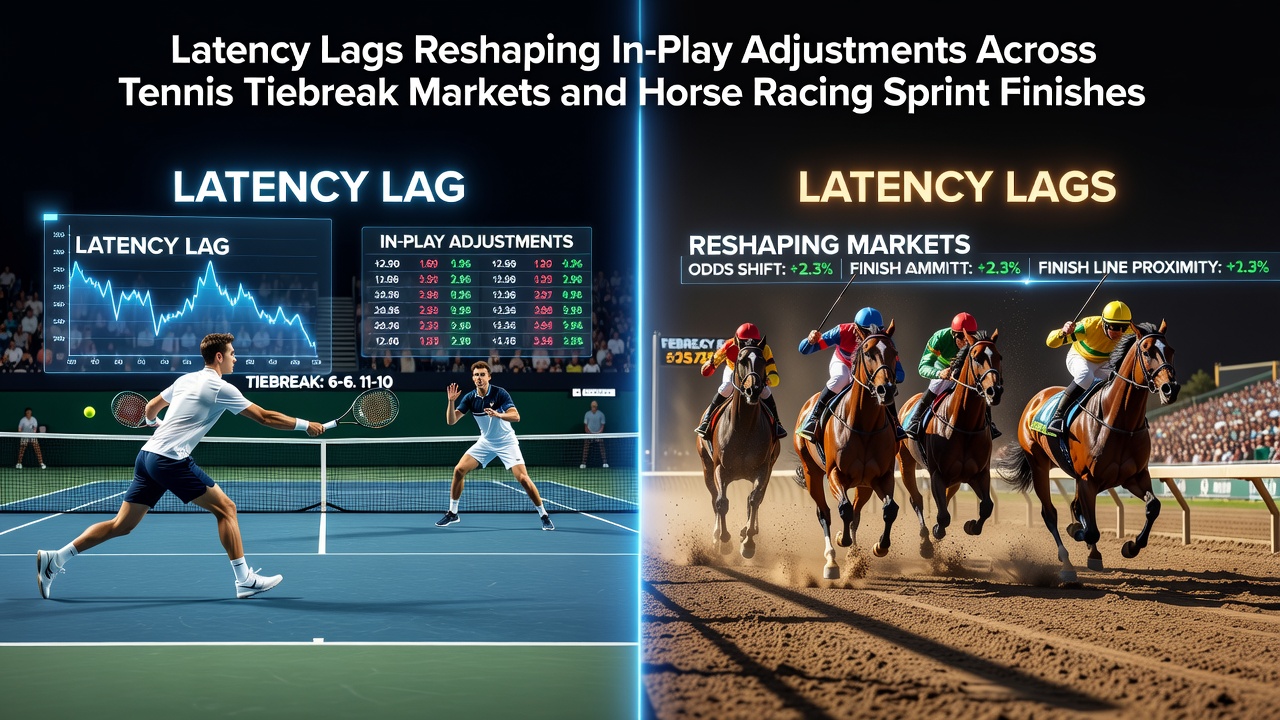
Live betting platforms face mounting pressure from transmission delays that alter how markets respond during critical moments in tennis tiebreaks and horse racing sprint finishes, where split-second decisions determine outcomes and odds must shift in real time. Data feeds from courtside sensors and track timing systems travel through multiple network hops before reaching bookmakers, creating gaps that force manual interventions and automated recalibrations across global operators. Observers note that these latency lags have prompted several platforms to introduce buffering protocols that smooth price movements while preserving accuracy in volatile segments like deciding sets or final 200 meters.
Tennis Tiebreak Dynamics Under Delay Pressure
Tiebreak markets in grand slam events and ATP 500 tournaments experience heightened sensitivity when data packets arrive late because serve speeds, point winners, and score updates must integrate instantly to adjust probabilities on next-point outcomes. Bookmakers rely on optical tracking systems that capture ball trajectories and player positions yet transmission bottlenecks between venue infrastructure and central servers can delay those inputs by 800 to 1500 milliseconds, enough to shift implied probabilities by several percentage points. Research from sports technology firms indicates that operators now deploy edge computing nodes closer to tournament sites to compress that window and allow in-play adjustments to reflect actual match state rather than stale snapshots.
During July 2026 Wimbledon coverage, multiple operators reported testing hybrid latency mitigation layers that combine satellite uplinks with terrestrial fiber backups, reducing average update lag from 1.2 seconds to under 400 milliseconds across tiebreak markets. Those who've monitored these trials observe that reduced delays permit finer granularity in odds for specific serve directions and return angles while decreasing the frequency of suspended betting during high-volume exchanges. Figures from European betting associations show tiebreak volume rising 18 percent year-over-year in 2025, underscoring why even modest latency improvements translate into measurable turnover gains for platforms handling thousands of concurrent users.
Horse Racing Sprint Finishes and Timing Precision
Sprint finishes in Group 1 races and major handicaps present parallel challenges because photo-finish cameras and sectional timing devices generate dense data streams that must reach in-play engines before the next betting window closes. When network congestion stretches transmission times beyond 500 milliseconds, automated models that project final positions based on early furlong splits lose resolution, forcing traders to widen spreads or temporarily suspend markets. Industry reports compiled by the Australian Communications and Media Authority highlight that thoroughbred racing venues have begun installing dedicated low-latency microwave links between starting stalls and broadcast centers to safeguard the integrity of live odds during the final 100 meters.
Cross-Market Technology Overlaps
Both tennis and racing markets share common dependencies on standardized data protocols such as those promoted by the International Betting Integrity Association, which established latency benchmarks in 2024 that operators must meet to maintain licensing compliance. Platforms that exceed these thresholds face increased scrutiny during live events, prompting investment in redundant fiber routes and software-defined networking that reroutes traffic dynamically. One study released by the University of Nevada's gaming research center found that markets experiencing sub-300-millisecond updates recorded 27 percent fewer customer disputes over settled bets compared with those averaging above 700 milliseconds.
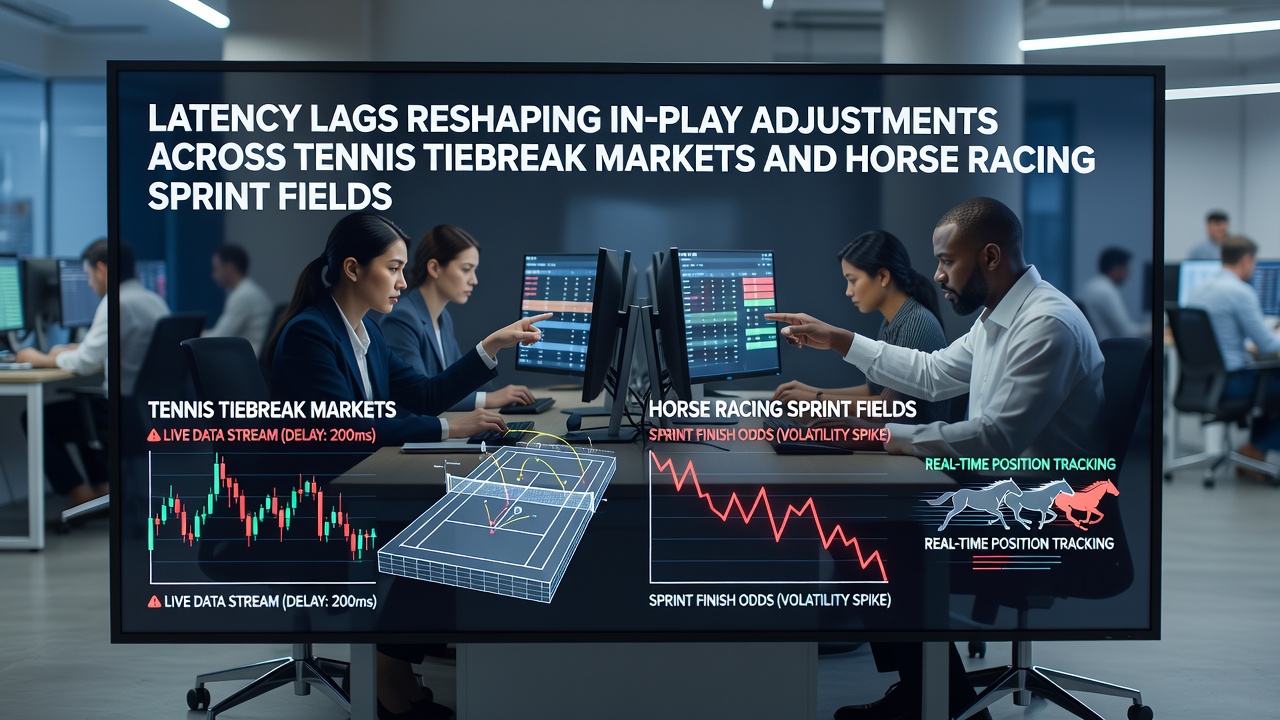
Operators now integrate machine-learning filters that predict likely score or position outcomes from partial data streams, filling gaps caused by momentary packet loss without introducing bias into final settlements. These predictive layers operate alongside traditional feeds so that when full telemetry arrives the model recalibrates instantly, maintaining continuity for accumulators that span tennis tiebreaks and sprint finishes. Data compiled across multiple jurisdictions shows that such hybrid approaches have stabilized hold percentages in live markets by reducing the need for post-event corrections.
Regulatory and Infrastructure Responses
Government agencies in several regions have begun requiring operators to publish average latency statistics for high-velocity markets, creating transparency that lets bettors and analysts compare platform performance directly. In Canada, provincial gaming authorities introduced reporting templates in early 2026 that separate tiebreak and sprint data from slower-paced segments, revealing that top-tier operators achieve median delays below 350 milliseconds during major events. European regulators have followed suit with voluntary guidelines that encourage investment in 5G private networks at venues, a move expected to become mandatory for flagship tournaments by 2027.
Training programs for trading desks now include modules on interpreting delayed feeds, teaching staff to recognize patterns that indicate transmission lag rather than genuine market shifts. This skill set reduces erroneous manual overrides that previously widened spreads unnecessarily and eroded customer confidence during tight finishes. Observers note that platforms investing in these programs report measurable improvements in settlement accuracy and fewer escalations to dispute resolution teams.
Conclusion
Latency management has emerged as a core operational discipline for bookmakers handling tennis tiebreak and horse racing sprint markets, driving infrastructure upgrades that deliver faster, more reliable in-play adjustments. Continued refinement of edge processing, predictive modeling, and regulatory oversight will determine how these segments evolve through upcoming seasons, with measurable impacts on both platform efficiency and participant experience.