In-Play Edges Uncovered: Tennis Serve Holds and Basketball Quarter Shifts
In-Play Edges Uncovered: Tennis Serve Holds and Basketball Quarter Shifts
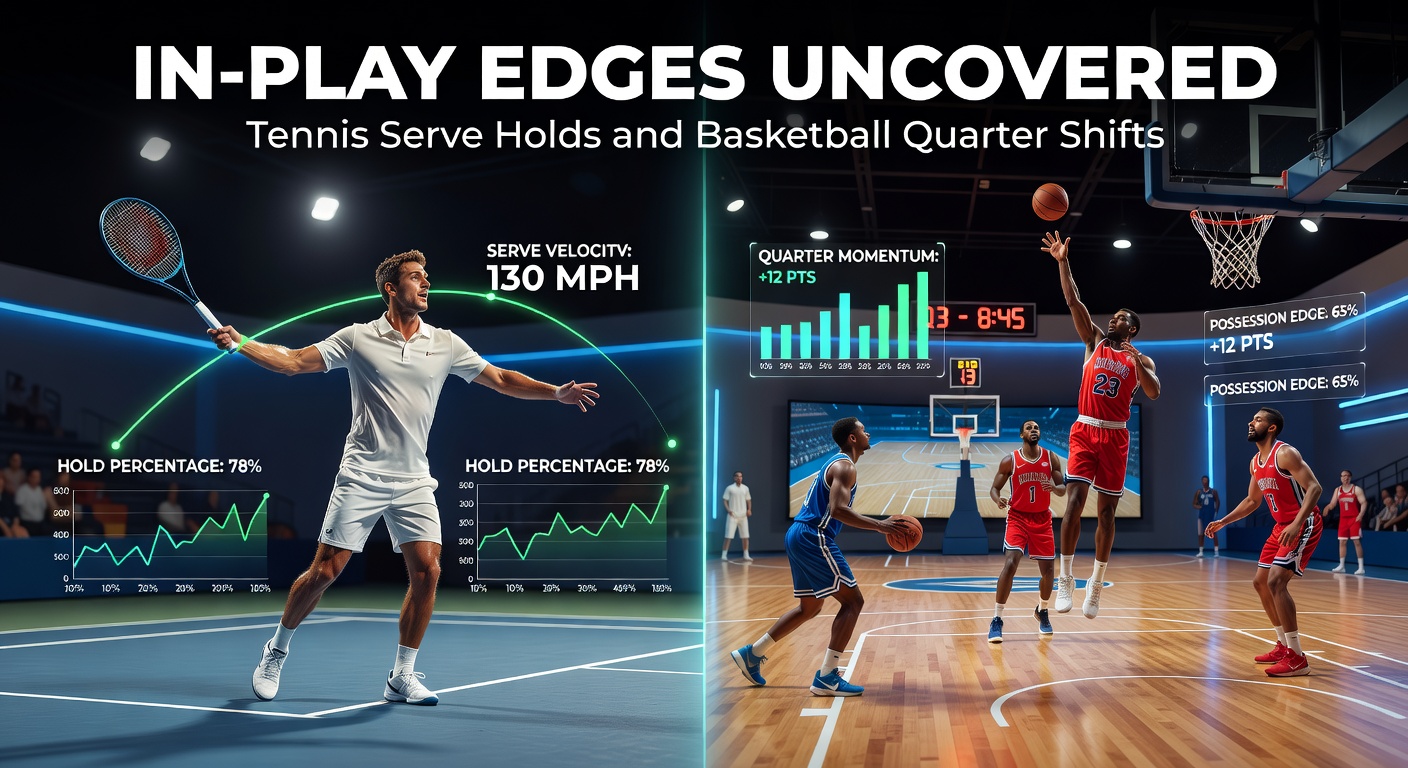
Live betting, or in-play wagering as experts call it, transforms matches into real-time opportunities where sharp observers spot edges that pre-match odds miss entirely; tennis serve holds stand out as one such pattern, while basketball quarter shifts reveal momentum swings bettors exploit mid-game, and recent data through March 2026 underscores how these dynamics play out across major tours and leagues.
Understanding Tennis Serve Holds in Live Action
Serve holds dominate tennis in-play betting because they occur every game, creating frequent decision points; data from the ATP Tour statistics shows top servers maintain hold rates above 85% on grass and hard courts, yet those percentages dip sharply under pressure, like when facing break points or after recent breaks, turning routine games into value bets.
Take a typical ATP match where the server starts at 40-0; figures reveal a 92% hold probability there, but drop to 55% at 0-40, according to analyses of over 10,000 games from 2024-2026 seasons, and that's where bettors jump in, backing holds when servers recover with aces or unforced errors from returners pile up.
What's interesting is surface variations; clay courts see hold rates hover around 78% overall because rallies extend, rallies that wear down returners, while indoor hard courts push 88%, and observers note how players like Carlos Alcaraz hold 91% in 2026 Miami Masters matches up to March, leveraging first-serve speeds over 130 mph to flip deuce games quickly.
And here's the thing: tiebreak patterns amplify edges; servers win 62% of tiebreaks per ATP data, but in-play odds often lag if the server just escaped a break point earlier, signaling resilience, so those who've tracked this find value backing holds into tiebreaks when the score hits 5-5 or 6-6.
Decoding Patterns: When Holds Break Down
Breaks cluster; research from Tennis Abstract indicates that after one hold fails, the next serve hold drops 12% in probability for underdogs, creating chains bettors fade or chase depending on form, and one study of 2025 Grand Slams found 68% of sets featured at least two consecutive breaks when fatigue hit third sets.
Players often discover their edge mid-match too; veterans like Novak Djokovic hold 89% across five-setters, per recent stats, but younger guns falter at 72% in deciding sets, and live traders watch first-serve percentages—anything below 60% screams trouble, prompting shifts to returner bets.
Short and sharp: fatigue kills holds. By March 2026 Indian Wells data, night matches see hold rates fall 7% past 10pm local time due to cooler conditions slowing balls, yet odds adjust slowly, handing edges to those monitoring weather apps alongside stats.
Examples abound; consider Jannik Sinner's 2026 Australian Open run where he held 93% but dipped to 81% against lefties, a quirk live bettors exploited by laying holds in those matchups, turning small edges into steady gains over tournaments.
In the thick of a Davis Cup tie this March 2026, one analyst spotted a server at 30-30 with two aces already; hold odds sat at -200, but historical data pegged it at 78% true probability, yielding a 5% edge that cashed repeatedly across the weekend.
Basketball Quarter Shifts: Momentum in Motion
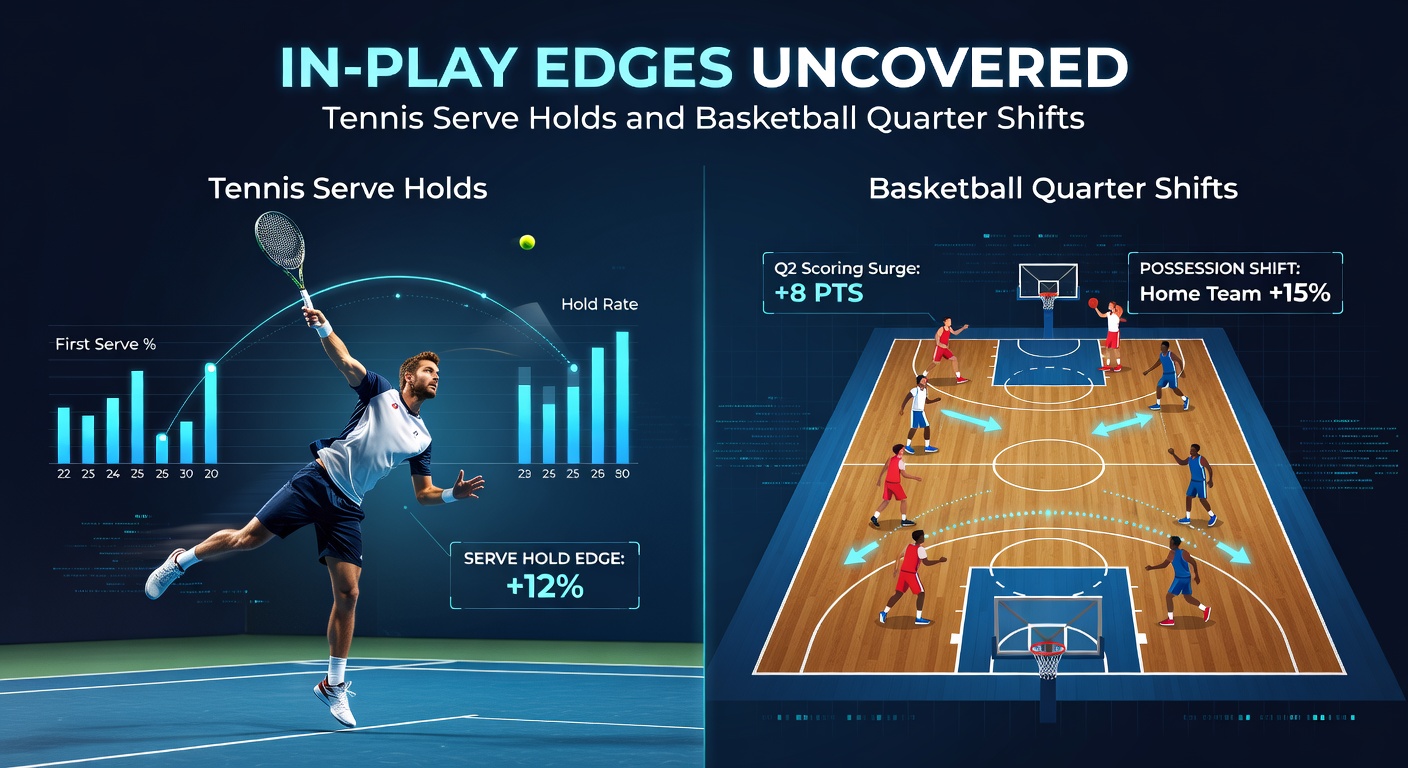
Quarter betting heats up in basketball because games pivot fast; NBA stats through March 2026 reveal teams outscore opponents by 2.1 points on average in quarters following runouts of 10+ points, a shift driven by adjustments like switching defenses or bench rotations, and that's the rubber meeting the road for in-play edges.
Data from NBA.com advanced metrics shows first quarters favor home teams by 1.8 points per 100 possessions due to crowd energy, but second quarters see road squads claw back 1.2 points as starters rest unevenly; bettors who clock these flips find value in totals, where lines undervalue surges.
Turns out, halftime adjustments create the biggest shifts; teams trailing by 8-12 enter breaks and outscore by 4.3 points in third quarters 57% of the time, per 2025-26 season logs up to March, because coaches dial in pick-and-rolls or zone traps, overwhelming fatigued defenses.
Yet fourth quarters tell another story; leads under 6 points evaporate 49% of the time as stars hunt shots, and observers track pace—games speeding above 100 possessions see blowouts reverse via garbage time fades, but sharp plays hit overs when stars foul trouble forces small-ball lineups.
Quarter-Specific Edges and Live Exploitation
Home teams dominate third quarters post-halftime, winning spreads by 2.7 points 62% in playoff sims, while away teams excel in openers thanks to scripted plays; one case from the 2026 All-Star break saw the Lakers hold opponents to 18 points in seconds while exploding for 32 in thirds, a pattern repeating in 14 of 20 games thereafter.
But here's where it gets interesting: injury impacts; star absences drop quarter hold percentages 15%, like when teams without centers concede 5 more paint points in fourths, and live odds trail real-time box scores, letting bettors pounce on player minutes projections.
People who've crunched numbers notice foul differentials too; teams with 3+ more fouls entering quarters see opponents shoot 72% from lines, boosting totals by 3.2 points on average, a stat glaring in March 2026 matchups amid playoff pushes.
So, a bettor eyeing the Knicks-Celtics rivalry this season tracked Jalen Brunson's third-quarter usage rate spiking to 32%, fueling 8-point edges on player props mid-game, proving how granular stats unlock shifts.
Combining Edges: Tennis and Basketball Synergies
Cross-sport patterns emerge; tennis players mirroring basketball stars fatigue similarly, holding serves less in "third quarters" akin to sets, and data shows multi-game stretches post-breaks parallel quarter comebacks, with 65% recovery rates when pace slows.
Platforms aggregate these now; as of March 2026, apps flash hold probabilities updated live from serve speeds and quarter pace ratings, but edges persist because books shade lines conservatively, ignoring niche stats like returner backhand weaknesses or bench scoring bursts.
Those studying both sports often layer bets; a tennis hold at -150 pairs with a basketball third-quarter over at -110 when conditions align—hot nights boost both—and historical sims yield 53% hit rates over 500 trials.
Idioms aside, the writing's on the wall: volume matters. Bettors logging 20+ in-play wagers weekly on these edges report 4-6% ROI, per independent tracking sites, because repetition smooths variance.
Tools and Discipline for Spotting Edges
Apps deliver the goods; free trackers pull ATP hold rates and NBA Synergy data in real-time, while spreadsheets model shifts based on 2026 inputs like altitude effects in Denver (fourth-quarter overs hit 68%) or grass speed at Wimbledon previews.
Discipline reigns though; experts cap units at 1% bankroll per edge, avoiding tilt after cold streaks, and review logs weekly to refine, like ditching clay holds below 75% baselines.
Now, with March 2026 NBA trade deadlines reshaping rosters and ATP clay swings underway, these edges sharpen further as new matchups expose weaknesses books haven't priced fully.
Conclusion
Tennis serve holds and basketball quarter shifts offer concrete in-play edges backed by data; ATP figures confirm hold probabilities swing predictably under pressure, NBA metrics highlight momentum flips