How Altitude and Climate Gradients Shift Performance Benchmarks Across Track, Court, and Pitch Events
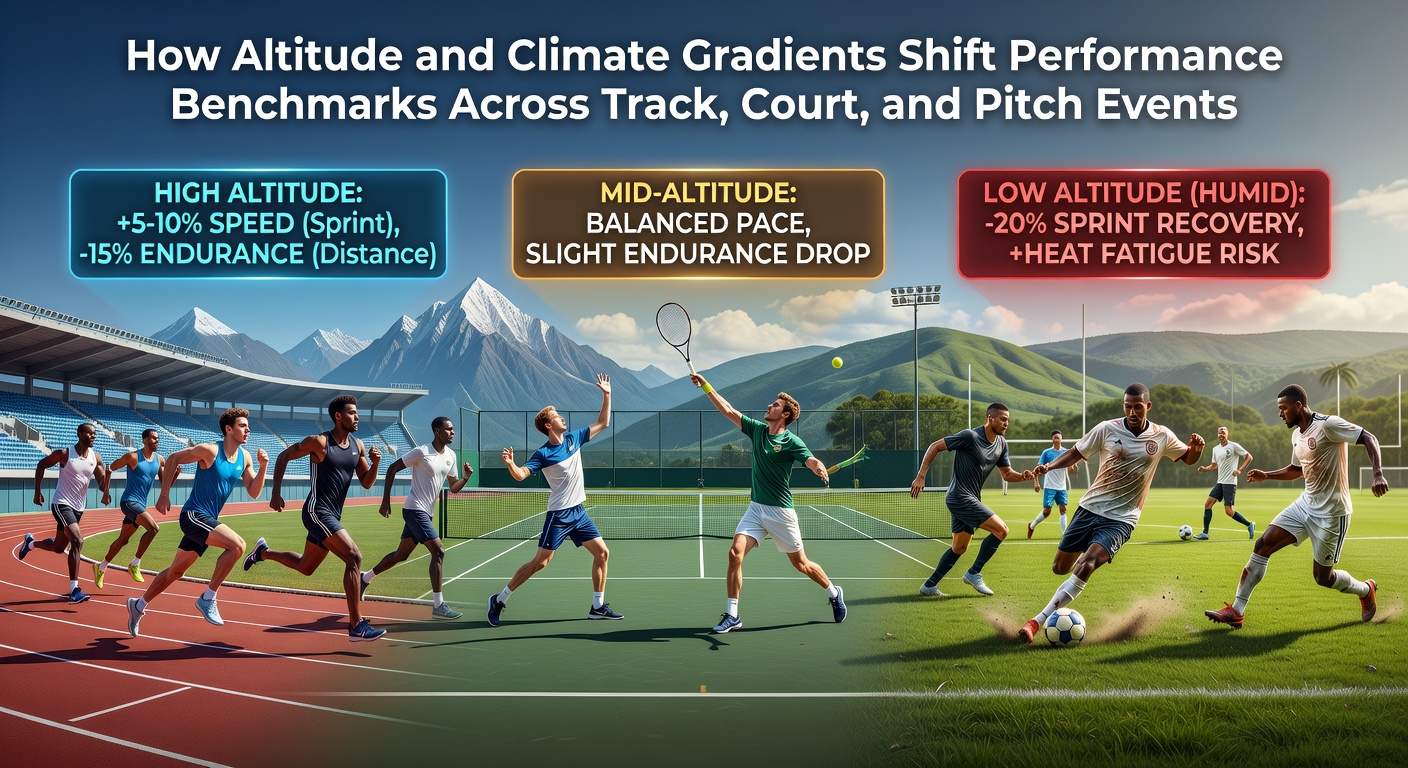 Environmental conditions reshape athletic output in measurable ways across running tracks, enclosed courts, and open pitches. Altitude reduces oxygen availability while altering air density, and climate factors such as temperature, humidity, and wind modify energy expenditure and recovery rates. Data collected from international competitions and laboratory simulations illustrate consistent patterns that governing bodies and coaching staffs now incorporate into preparation protocols.
Altitude Influences on Track and Field Events
Track performances diverge sharply once elevation exceeds 1500 meters because thinner air lowers partial oxygen pressure and decreases aerodynamic drag. Sprint and jump events benefit from reduced resistance, whereas distance races face oxygen debt that slows pace after the initial laps. Observers at the 1968 Mexico City Olympics recorded multiple world records in the 100-meter dash, long jump, and triple jump, while middle-distance and marathon times lagged behind sea-level equivalents.
Researchers tracking elite athletes note that 400-meter times improve by roughly 1 to 2 percent at 2000 meters, yet 5000-meter performances decline by 5 to 7 percent under identical conditions. Training camps established in Colorado Springs and Addis Ababa allow acclimatization periods of 14 to 21 days, during which hemoglobin mass increases and buffering capacity improves. Those adjustments partially offset endurance deficits but rarely eliminate them entirely for events longer than two minutes.
Climate Variables Affecting Court-Based Sports
Court surfaces introduce additional variables because enclosed or semi-enclosed venues trap heat and humidity while limiting natural airflow. Tennis matches played above 30 degrees Celsius with relative humidity exceeding 60 percent extend rally durations as players reduce swing speed to manage core temperature. Data from the Australian Open and Indian Wells tournaments show that match lengths increase by an average of 12 minutes when wet-bulb globe temperatures surpass 28 degrees.
Basketball provides another clear example. NBA teams competing in arenas located at 1600 meters, such as Denver, record higher three-point shooting percentages during the first three quarters because reduced air density allows slightly flatter trajectories and marginally longer flight times. Yet fourth-quarter foul shooting declines as dehydration accumulates faster than at sea level. League medical staff therefore adjust hydration schedules and substitution patterns based on venue elevation and forecasted indoor humidity.
Pitch Sports and Combined Environmental Pressures
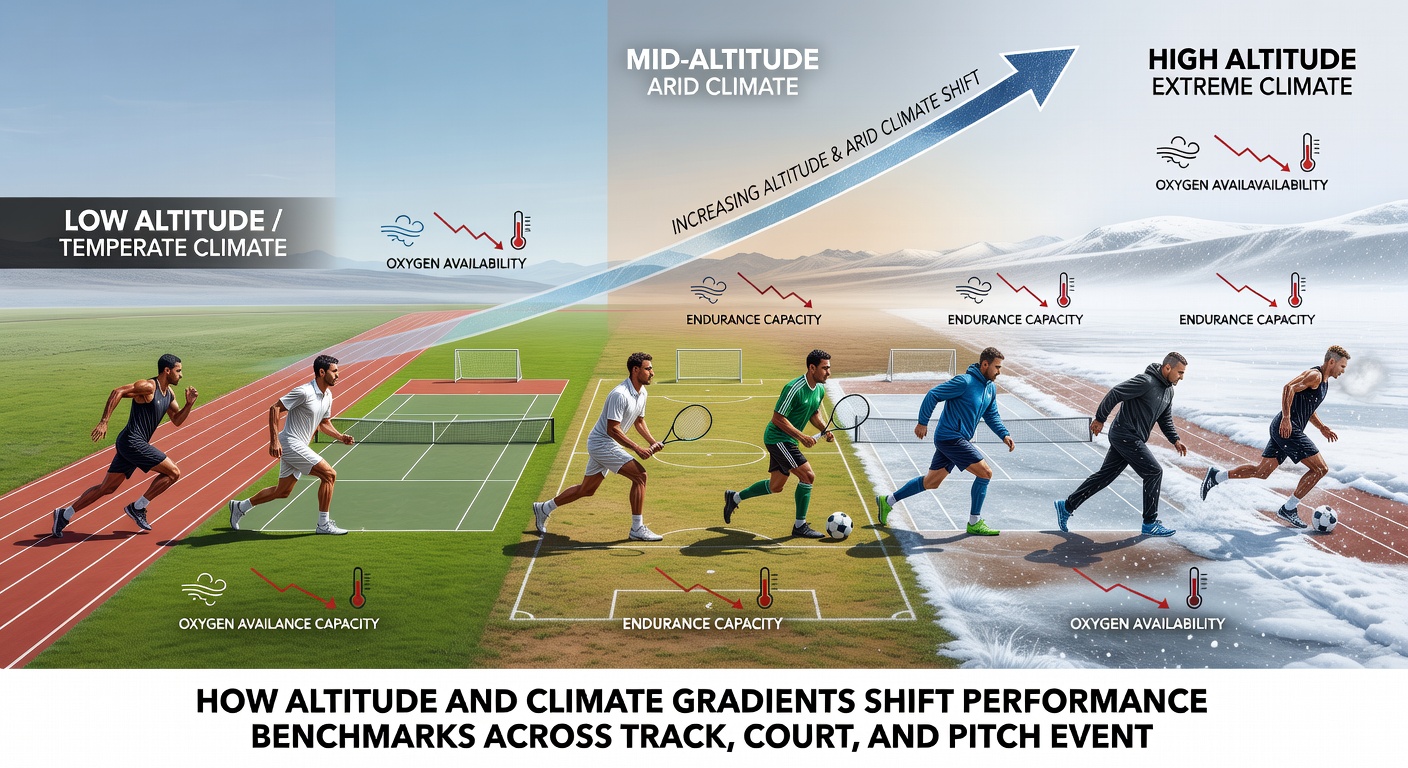
Football and cricket unfold on larger grass surfaces exposed to wind, precipitation, and rapid temperature swings. Matches staged at 3600 meters in La Paz require players to adopt shorter passing sequences because sustained high-intensity running drops by approximately 15 percent after the 30-minute mark. FIFA medical guidelines recommend extended half-time breaks and mandatory cooling periods when matches occur above 2500 meters.
Cricket fast bowlers lose 3 to 5 kilometers per hour in delivery speed at elevations above 1500 meters, while spin bowlers gain modest advantages from reduced seam movement in thinner air. Humidity levels above 70 percent further soften pitches, increasing turn for spinners yet reducing bounce for seamers. Tournament organizers in South Asia and southern Africa publish pitch and weather reports 48 hours before play so teams can finalize selections accordingly.
Integrated Monitoring Approaches Ahead of June 2026
National federations now combine wearable sensors with environmental modeling to predict performance decrements before competition. European athletics federations and Australian sports institutes share datasets that correlate heart-rate variability, blood-oxygen saturation, and external load across multiple venues. These models allow coaches to adjust pacing strategies or roster selections days in advance rather than reacting during events.
Wind patterns also matter on open pitches. Tailwinds exceeding 2 meters per second legalize record attempts in track sprint events yet complicate cricket outfielding and football set-piece delivery. Data-logging stations positioned around stadia feed real-time adjustments into broadcast graphics and coaching tablets, giving spectators and support staff simultaneous visibility into shifting conditions.
Conclusion
Altitude and climate gradients produce predictable, quantifiable shifts in performance benchmarks that vary by sport duration, movement type, and surface characteristics. Track sprinters and jumpers gain measurable edges at elevation, endurance athletes incur consistent deficits, and court or pitch athletes experience intermediate effects mediated by heat, humidity, and airflow. Ongoing collection of physiological and environmental data continues to refine preparation standards across all three categories of events.