Cross-Timezone Event Clustering and Its Impact on Multi-Sport Bet Construction

Cross-timezone event clustering refers to the concentration of sports competitions from different regions within narrow windows on the global clock, and this pattern shapes how multi-sport bets get assembled because timing overlaps determine data flow, odds updates, and risk layering. Observers note that when events from North America, Europe, Asia, and Oceania align in evening or early morning slots for a given market, bettors face compressed decision periods that affect accumulator construction across football, tennis, basketball, and cricket. Data from scheduling analyses show these clusters occur regularly because broadcast rights and venue availability push fixtures into overlapping periods rather than spreading them evenly.
How Timezone Patterns Form Event Clusters
Sports calendars produce natural groupings when leagues in one hemisphere schedule around local primetime while others operate on opposite cycles, and researchers tracking fixture lists have documented that clusters intensify during summer months when multiple codes run simultaneously. In July 2026 major tournaments across continents will create one such dense period, with basketball exhibitions in the United States overlapping cricket series in the Indian subcontinent and tennis events in western Europe, all feeding into the same 12-hour window for many international bettors. Figures from sports data aggregators indicate that these alignments increase the volume of simultaneous markets by up to 40 percent compared with non-cluster weeks, forcing platforms to synchronize feeds from disparate sources.
Those who study betting systems point out that clustering does not simply add volume but alters the sequence in which information arrives, because a late-night basketball result from one zone can reach European servers before an afternoon tennis match in another zone concludes, and this staggered arrival influences how odds compilers adjust lines for linked accumulators. Studies of market liquidity during clustered periods reveal higher turnover in multi-sport products precisely because bettors can chain selections across the overlapping schedule without waiting for separate days.
Effects on Accumulator Construction and Odds Dynamics
Multi-sport bet construction relies on combining selections whose outcomes become known at different times, and cross-timezone clustering compresses that timeline so that several legs resolve within hours instead of days. According to industry reports on betting behavior, this compression changes stake allocation strategies because bettors must decide whether to place the full accumulator before all events start or to build it incrementally as earlier results come in. Evidence from platform transaction logs shows increased use of partial cash-out functions during cluster windows, as participants respond to live updates that arrive faster than in dispersed schedules.
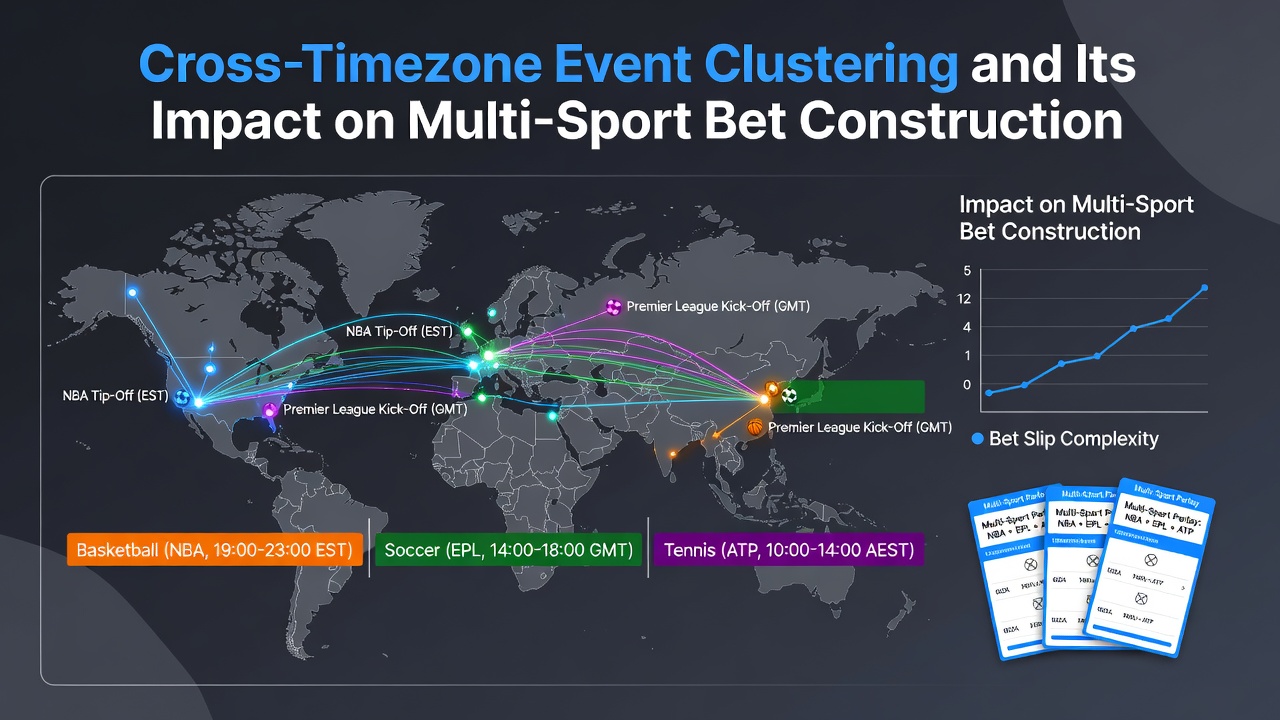
What's interesting is that odds comparison tools must handle more frequent updates when clusters occur, and data indicates that variance in implied probabilities rises when multiple sports feed simultaneous information streams. One study of accumulator performance across 18 months found that bets spanning clustered timeframes exhibited different payout distributions than those spread across isolated events, primarily because correlated information shocks propagate quicker through the system. Those constructing such bets therefore adjust selection criteria to account for the compressed information cycle rather than treating each leg as independent.
Data Sources and Regulatory Context
Regulatory bodies in several jurisdictions track how clustering affects responsible gambling features, and reports from the Australian Gambling Research Centre highlight that rapid resolution sequences can influence session length for multi-sport products. Similarly, research published through the National Council on Problem Gambling in the United States examines timing pressures on bettors during high-density event windows. These sources document measurable shifts in product usage without attributing causation to any single factor.
Academic work on sports scheduling, including papers from European universities examining fixture calendars, confirms that timezone-driven clusters are structural rather than accidental, arising from commercial decisions around global audiences. Observers tracking these patterns note that operators respond by enhancing live-data infrastructure to maintain consistent odds during peak overlap periods, which in turn supports the construction of more complex multi-sport bets.
Conclusion
Cross-timezone event clustering therefore functions as a structural feature of the global sports calendar that directly influences how multi-sport bets are built, priced, and settled. Data shows that the density of overlapping fixtures alters information flow and decision timing, while regulatory and academic sources document the resulting adjustments in both operator systems and bettor behavior. As calendars continue to feature dense summer periods such as July 2026, these clustering effects remain central to understanding accumulator construction across sports.